












ProEconomy: Orca® - Legionella prevention. The Orca System Water Ionisation Treatment. Tel: +44 (0)1525 854111. Fax: +44 (0)1525 854211. email: enquiries@proeconomy.com
misc header graphic
misc header graphic

Press Releases

January 2010

Why does the Department of Health insist on the temperature regime as the preferred option to control Legionella?

ProEconomy are pushing the Department of Health (DoH) to answer this very question. Proeconomy’s Mark Raper explains, we asked the DoH to show us the evidence that they must have used to support their recommendations in the HTM04 that the temperature regime should be the ‘preferred’ method to control Legionella in water systems. The DoH could not give this evidence (because there is none!) and are putting public health at risk.

After a debate in the Houses of Parliament in May 2007, ProEconomy had to continue to put pressure on the DoH and a further meeting was held in the House of Commons in May 2008. ProEconomy achieved a successful outcome and an independent review of the HTM04 was commissioned in March 2009, six years after ProEconomy initiated the discussion. Time moves slowly in the corridors of power!

The independent review concluded that; “on the grounds of efficacy, reliability and energy costs, copper and silver or chlorine dioxide technologies should be recommended over thermal disinfection, provided adequate monitoring are applied”, and that “the presence of copper (0.2-0.8 mg/l) and silver (0.02-0.08 mg/l) ions, without elevated hot water temperatures, effectively and safely eradicates Legionella spp.” (You can view a copy of the review in full on ProEconomy’s website www.proeconomy.com).

In light of the independent review, it is puzzling that the DoH has taken this stance and that to change the word “preferred” when referring to the temperature regime in the HTM04 to the word “traditional” as in the L8 Approved Code of Practice (AcoP) is proving to be such a drawn out process.

We started challenging the DoH back in 2003 when we were asked to comment on their draft HTM04. Chris Holme and Nigel Tomlinson of the DoH stated that the HTM04 is based on scientific evidence and that enough scientific evidence supported the temperature regime as their ‘preferred’ option. They quoted that 32 scientific papers supported this.

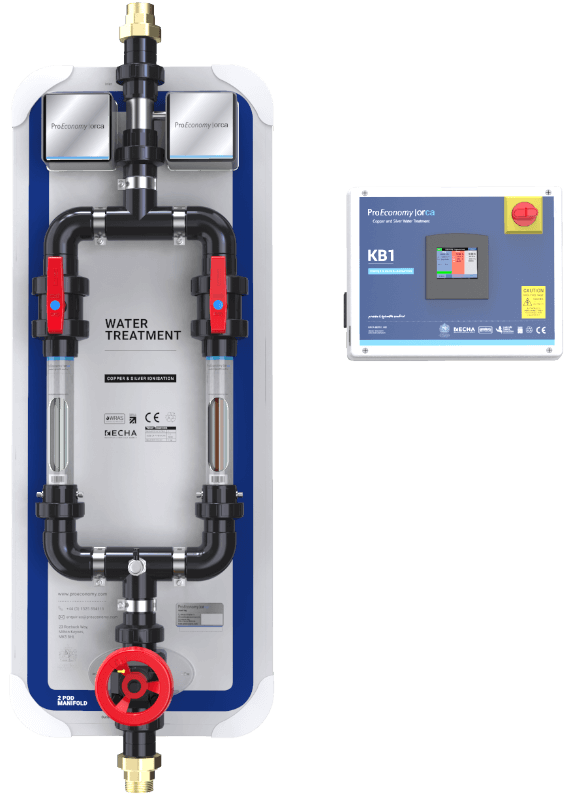
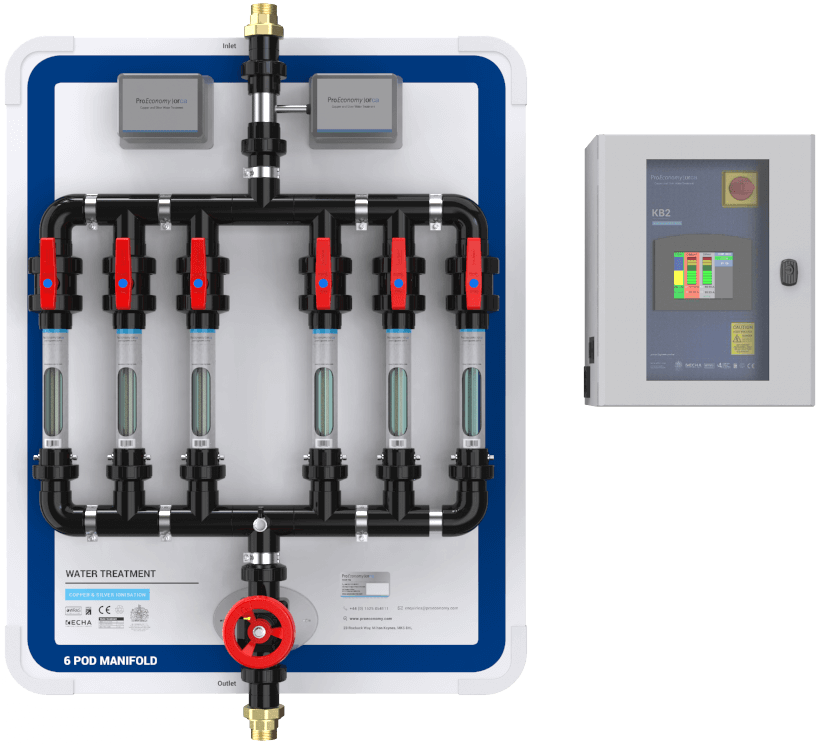
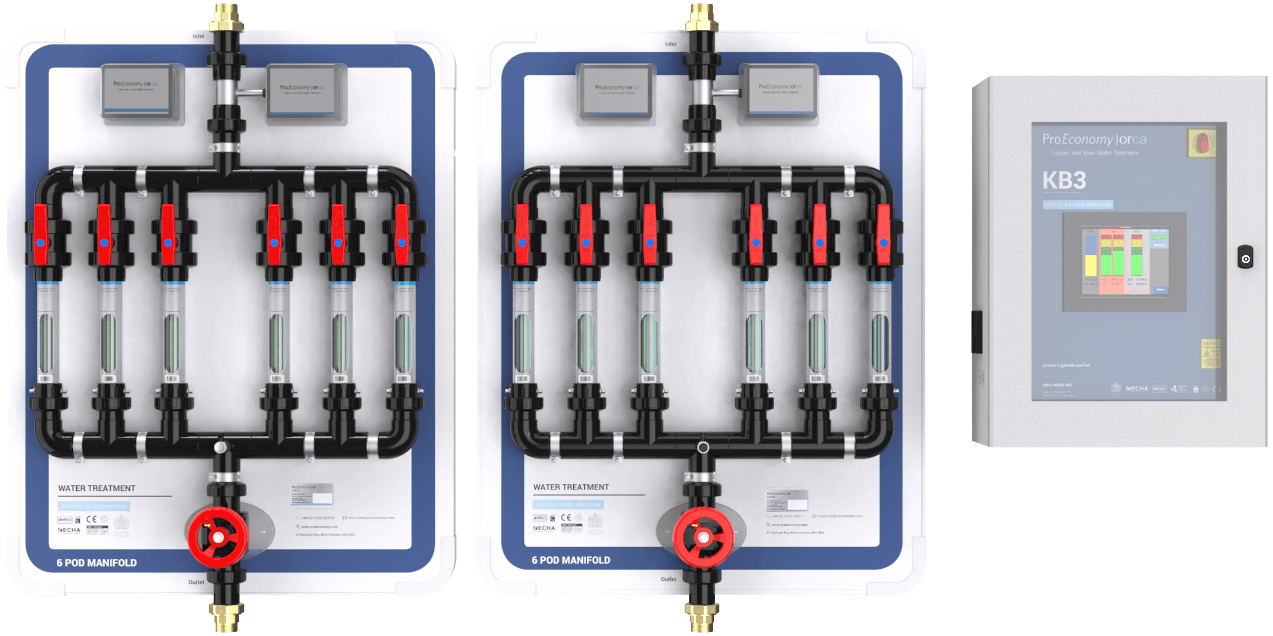
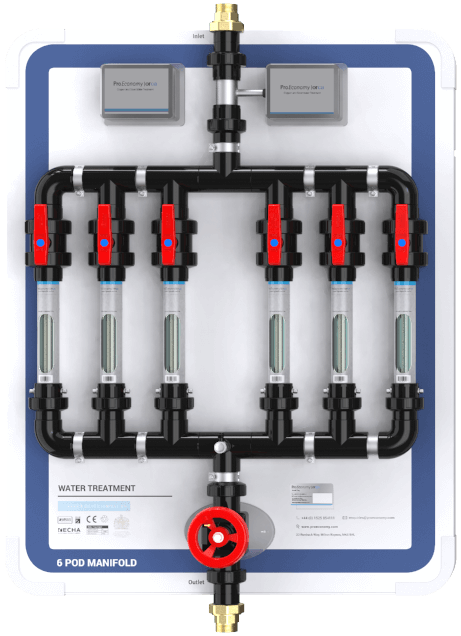
After numerous requests to view these papers went unanswered, ProEconomy eventually had to resort to the use of the Freedom of Information Act. Shockingly, none of the papers supported the temperature regime. The majority of papers actually supported copper and silver ionisation to control Legionella, which is the technique of ProEconomy’s Orca ionisation system.

We were so enraged by the lack of evidence allegedly supporting the temperature regime that we arranged, together with local MP, a debate in Parliament in May 2007. The outcome of this debate was that the DoH should not recommend a ‘preferred’ method to control Legionella and that NHS Trusts should be able to choose for themselves the most suitable Legionella control method. (You can view a copy of the official Hansard document that followed this debate on ProEconomy’s website www.proeconomy.com).

In May last year we had to confront the DoH again, because they still had not replaced the word ‘preferred’ with ‘traditional’ in the HTM04, and met with them in the House of Commons. They then claimed that they could not understand what ‘the fuss was about’ and maintained that the word ‘preferred’ was only mentioned in the Introduction of the HTM04 and not in the actual guidance and they also expressed their opinion that the word “preferred” has the same meaning as ‘traditional’. How is this possible?

‘Legionella enters water systems through the mains water. You heat the water to 60°C and circulate it throughout your site. Then, because of the fear of scalding, you use TMVs, mixing the hot water with untreated cold water that comes straight from the mains.

This untreated mains water, at risk of Legionella contamination, is mixed with the heated water in the TMVs to a temperature of 40°C – the ideal temperature for the spread of Legionella. Where is the logic behind this?’

If the scientific papers that the DoH have quoted as defence to their argument do not even support them, then, how seriously are the DoH taking this issue? More worryingly, the DoH has recently dropped the ‘scientific’ basis for their argument in favour of ‘expert opinion’. This feeble attempt to protect the ‘preferred’ option begs to question what else are the DoH going to drop to defend the undefendable?

All ProEconomy are asking for is that the word ‘preferred’ in the HTM04 is replaced with the word ‘traditional’ as in the L8 ACoP.

Birgitta Bedford, who is studying for a PhD degree in Legionella control, explains that the temperature regime just doesn’t make sense. We find high counts of Legionella in most samples of sites that rely on the temperature control regime. In samples that we take before the Orca ionisation system is installed, we also often find Legionella in mixing valves.

If you think logically about this, she explains, because of the risk of scalding the hot water has to be mixed with untreated cold water to a temperature at which Legionella feels most comfortable. Even the UK Health Protection Agency voices concerns about mixing valves as it is impossible to get successful Legionella control downstream of them. (Presentation of Dr John Lee, Health Protection Agency, at the Water Management Society Conference, 2006).

Also, the standard Legionella analysis process includes exposing samples to 50°C for 30 minutes to eliminate other bacteria but to ensure that the Legionella continue to multiply so that they can be detected, confirming again that 50°C does not control Legionella.

There is no scientific evidence that Legionella in water systems is controlled at 50°C and at 20°C. We often find high Legionella counts at temperatures as low as 15°C and as high as 60°C. We offered proof of this to the DoH before publication of the HTM04 but they were not interested.

In addition, the temperature regime is costly. Some hospitals have as many as a thousand expensive mixing valves installed that also have to be maintained and replaced regularly. Really, it is absurd to go to these lengths to implement a temperature regime that is scientifically unproven.

It is not only difficult to maintain >50°C and <20°C at every outlet in a hospital but it could also be impossible the maintain <20°C when water companies, because of the changes in European law, are allowed to supply water at 25°C.

Heating systems have to run at 60°C or above to deliver water at >50°C at the outlets. The hot water temperatures then have to be reduced to protect people from scalding by mixing the hot water with untreated cold water! This makes you realise how much money and energy is wasted by the ineffective temperature control regime.

We have converted a large number of NHS hospitals, who are now controlling Legionella at reduced hot water temperatures, allowing them to remove the expensive, labour-consuming mixing valves. They regularly test for Legionella, proving that they are in control. They are now saving substantially not only in money but also in energy whilst having a Legionella control strategy that they have ultimate confidence in, giving peace of mind.

© ProEconomy 2010. Designed by 3DB.